
Small Bathroom Ideas: clever ways to make the most of limited space
A small bathroom needn’t feel like a compromise. In fact, limited square footage often encourages better, more intentional design. When every fitting must earn its place and every surface has a purpose, the result can feel neater, calmer and more luxurious than a sprawling but cluttered space. The secret lies not in squeezing more in, but in choosing less — and choosing wisely. By thinking carefully about layout, light, storage and proportion, you can create a room that feels effortless rather than overcrowded — and we show you exactly how to make it happen.
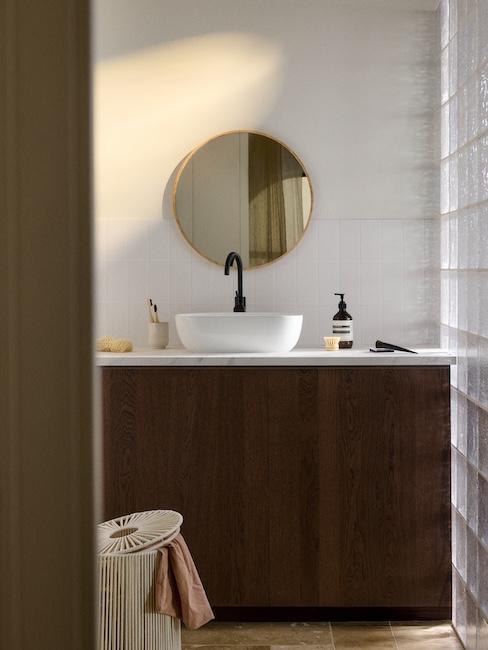
A small bathroom needn’t feel like a compromise. In fact, limited square footage often encourages better, more intentional design. When every fitting must earn its place and every surface has a purpose, the result can feel neater, calmer and more luxurious than a sprawling but cluttered space. The secret lies not in squeezing more in, but in choosing less — and choosing wisely. By thinking carefully about layout, light, storage and proportion, you can create a room that feels effortless rather than overcrowded — and we show you exactly how to make it happen.
Why do small bathrooms often feel smaller than they really are?
It’s rarely the dimensions alone that cause a cramped feeling. More often, it’s visual noise. Bulky fittings, dark corners, too many finishes and cluttered surfaces interrupt the eye and break the sense of flow. When the eye cannot travel smoothly around the room, the space appears tighter than it actually is.
Creating spaciousness is therefore as much about perception as measurement. Clean sightlines, consistent materials and wall-hung fixtures allow the room to “breathe”. A clear floor, uninterrupted tiling and simple shapes help the bathroom feel cohesive rather than chopped into pieces.
In short: simplify first, decorate second.
How should you plan the layout before buying anything?
Before selecting tiles or taps, stand in the empty room and consider how you move through it. Where do you naturally reach first thing in the morning? Where will towels hang? Can doors open freely without blocking the basin or shower?


Small bathrooms reward practicality over symmetry. Shifting a basin just a few centimetres, or swapping a hinged door for a sliding one, can dramatically improve flow. Wall-mounted sanitaryware also creates the illusion of extra floor area, making cleaning easier while visually enlarging the room.
Design the route through the space first — then fit everything else around that.
Furnishings that save space — without ever compromising on style
The best compact bathrooms rely on fittings designed specifically for tight footprints rather than scaled-down standard models. Slim depths, concealed components and floating forms make all the difference.
| Furniture / Solution | Why It Works | Ideal For | Extra Tip |
|---|---|---|---|
| Freestanding slim vanity unit | Provides storage without drilling walls | Small bathrooms | Use baskets or organisers inside drawers for neatness |
| Ladder shelf / leaning shelf | Makes use of vertical space, easy to move | Towels, décor items | Choose wood or metal to match your bathroom style |
| Hanging baskets or hooks with adhesive pads | No drilling, temporary | Towels, toiletries, accessories | Stick to smooth surfaces like tiles or glass for best adhesion |
| Trolley / rolling cart | Flexible and mobile | Cosmetics, cleaning supplies | Can be moved around or stored elsewhere when not needed |
| Mirror cabinet or shelf mirror | Reflects light and adds storage | Toothbrushes, skincare | Lightweight, wall-mounted with removable fixings or adhesive |
| Multi-purpose storage bench / stool | Provides seating plus hidden storage | Towels, bath linen | Look for a cushioned bench with removable lid or compartments |
| Baskets and boxes in various sizes | Keeps things organised and tidy | Under shelves, on units, in alcoves | Natural materials like rattan or bamboo add warmth and style |
Why better storage is the real game-changer
Clutter is the quickest way to make a small bathroom feel chaotic. Bottles perched on every ledge and towels piled on radiators instantly shrink the visual space. The solution isn’t necessarily more cupboards, but smarter ones.
Built-in storage works best because it doesn’t interrupt the lines of the room. Recessed niches inside shower walls, tall slim cabinets and mirrored cupboards all provide capacity without bulk. Think vertically rather than horizontally. A narrow full-height unit often stores more than a wide chest while taking up half the footprint.


| Type | Space Required | Storage Capacity | Visual Impact |
|---|---|---|---|
| Freestanding unit | Medium–High | High | Heavy |
| Wall cabinet | Low | Medium | Light |
| Recessed niche | Very Low | Medium | Minimal |
| Under-basin drawers | Low | Medium–High | Clean |
| Open shelves | Low | Low–Medium | Airy but can look cluttered |


How important is lighting in a small bathroom?
Lighting might be the single most transformative element in a compact space. Even beautifully designed bathrooms feel cramped if corners are shadowy or the mirror lighting is harsh. Good lighting adds depth, highlights textures and makes the room feel layered rather than flat.
A combination of direct and indirect light creates balance and flexibility throughout the day.
Direct Lighting — Where do you need precision?
Task lighting is essential around the basin and mirror. Without it, shaving, applying make-up or grooming becomes frustrating.
Spotlights, wall lights positioned at face height, and illuminated mirrors all provide clear, flattering light. Aim for warm white tones to keep the atmosphere cosy rather than clinical, and always ensure fittings are suitable for bathroom safety zones.


Indirect Lighting — How do you add atmosphere and depth?
Indirect lighting softens the space and adds a subtle glow that visually expands the room. LED strips tucked beneath a vanity, behind a mirror or along ceiling coving create a floating effect that feels both modern and luxurious.
This layered approach eliminates harsh shadows and makes the bathroom feel calmer — especially useful for evening baths or late-night visits.
The most successful designs combine both styles: practical by day, soothing by night.
Can mirrors really double the sense of space?
Few tricks work as effectively — or as affordably — as a well-placed mirror. By reflecting both light and sightlines, mirrors create depth that makes walls appear further away.


A single oversized mirror across the vanity can make even the smallest bathroom feel expansive. Mirrored cabinets serve a dual purpose, offering storage while amplifying brightness. Backlit mirrors, meanwhile, add a soft halo that feels contemporary and spa-like.


Round or frameless designs tend to feel lighter and less intrusive, while positioning a mirror opposite a window maximises natural light.
Colours and materials that work best in small bathrooms
Light, reflective finishes help walls recede visually, making the room feel open and airy. Soft whites, warm greys and muted pastels are reliable choices because they bounce light rather than absorb it.


Large-format tiles reduce grout lines and create continuity, while glossy or satin finishes subtly reflect light around the space. Glass shower panels maintain clear sightlines where curtains or heavy frames would interrupt them.
This doesn’t mean everything must be white. A darker vanity or feature wall can add contrast and depth — just use bold tones sparingly to avoid closing the room in.
Small details that make the biggest difference
Often it’s the finishing touches that elevate a small bathroom from merely functional to thoughtfully designed. Swapping a bulky radiator for underfloor heating frees up valuable wall space. Matching towel rails, taps and accessories in the same finish keeps the look cohesive. Decanting products into simple containers reduces visual clutter.
Small rooms reward restraint. Less truly is more.
Compact layouts to inspire your small bathroom design
| Bathroom Type | Recommended Furniture / Storage Ideas |
|---|---|
| 1.5 m x 2 m | Corner shelf, slim cabinet or rolling trolley, hanging baskets |
| Narrow & long | Sliding door cabinet, floating storage unit, open wall shelves |
| Guest bathroom / Cloakroom | Slim console table, mirror cabinet with storage, hook rails |
| Loft / Attic | Low sideboards, storage boxes under sloped ceiling, recessed shelving |
Can a Small Bathroom Feel Luxurious?
Absolutely. Luxury in a compact space comes from clarity and intention rather than size. When lighting is layered, storage is hidden and every element is carefully chosen, even the smallest bathroom can feel serene, stylish and surprisingly spacious.
Think clean lines, thoughtful details and smart functionality — and you may find that smaller truly is better.
FAQs
How do I make a tiny bathroom look bigger quickly?
Declutter surfaces, add a large mirror, switch to brighter lighting and use lighter colours. These changes alone can transform the space without major renovation.
What lighting temperature is best for a small bathroom?
Warm white (around 2700–3000K) feels inviting and flattering, while still bright enough for tasks.
Are wall-hung fittings worth it?
Yes. They create visible floor space, look modern and make cleaning easier — all of which enhance the sense of openness.
What’s the biggest design mistake in small bathrooms?
Overcrowding the room with bulky furniture or too many materials. Keep it simple and purposeful.