
Decorating a small bedroom: the 12 best tips and ideas
A bedroom is where we slow down and switch off. And yes, it works even in very small spaces. With a little creativity and the right styling choices, a small bedroom can feel warm, calm and beautifully liveable. Our interior experts show you how to decorate a small bedroom in a way that feels both smart and stylish. Let these tips and ideas inspire you.
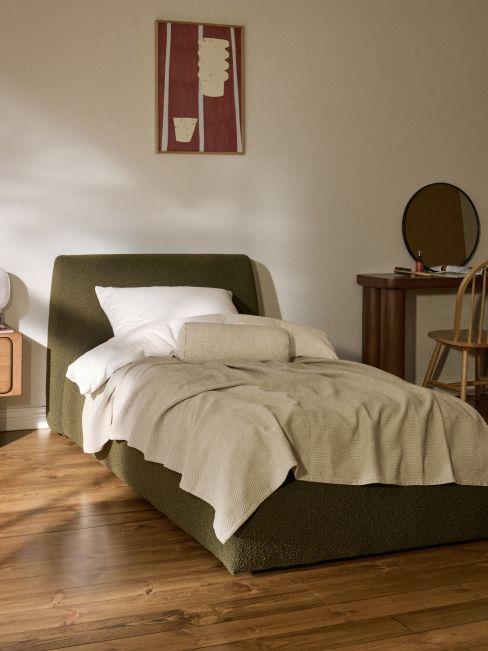
A bedroom is where we slow down and switch off. And yes, it works even in very small spaces. With a little creativity and the right styling choices, a small bedroom can feel warm, calm and beautifully liveable. Our interior experts show you how to decorate a small bedroom in a way that feels both smart and stylish. Let these tips and ideas inspire you.
1. Add enough storage in a small bedroom
We show that a small bedroom can feel surprisingly spacious. The secret is simple: keep surfaces clear and give everything a place. That instantly reduces visual noise, which makes the room feel calmer.
If floor space feels tight, choose a bed with built-in storage drawers. You gain a hidden zone for bedding, towels and seasonal pieces, without adding extra furniture.
For extra storage, place a chest of drawers opposite the bed if the layout allows. It keeps everyday essentials close, but still leaves the room feeling balanced. Store socks, underwear and beauty essentials inside. Use boxes or baskets for smaller items. They stop drawers turning into clutter.
Hygiene tip: Open closed bed drawers from time to time. Fresh air keep everything feeling clean and fresh.

2. Decorate a small bedroom with sloped ceilings
Do you have a small bedroom with a sloping ceiling? No problem. This layout can feel cosy and characterful, as long as you respect the height.
Because ceiling height is limited, move tall wardrobes and bulky chests of drawers elsewhere if you can. A hallway or entry area often works well. If that is not an option, choose a low sideboard. It keeps the room open and avoids a top-heavy look.
Keep furniture to the essentials. A bed and a bedside table often feel like enough. If you have space, add a bench at the foot of the bed. It softens the room and gives you a useful landing spot for clothes or a tray. Add soft rugs and cushions, and your small bedroom feels complete.
3. Use mirrors to make a small bedroom feel bigger
Small rooms can feel tight quickly, especially when light gets absorbed by fabrics and furniture. Mirrors bring instant brightness and depth because they bounce daylight back into the space.
Hang a mirror where it reflects light, not clutter. A well-positioned mirror opens up the room without creating visual noise. Place it opposite a window if possible, or next to it to spread the light more softly.

4. Light a small bedroom the right way
Lighting decides whether a small room feels airy or cramped. Start with daylight. Keep the bed away from the window so light can flow freely and the room feels more open from the moment you walk in.
Then add layers. One ceiling light rarely feels cosy on its own. Use indirect lighting to soften the room in the evening. Floor lamps, candles and fairy lights lift the mood and remove harsh shadows. Create small light islands with table lamps or wall lights. They make the room feel calm, warm and intentionally styled.


5. Choose calm, light colours for a small bedroom
Colour affects how big a room feels, but also how restful it feels. In a small bedroom, choose shades that keep the space visually quiet.
Go for light tones such as pastel blue, green or pink, plus beige, cream, white and soft grey. These colours reflect light and reduce strong contrasts, which helps the room feel more spacious. They also feel soothing, which makes them ideal for sleep.
Dark colours can feel heavy in a small room, especially on large surfaces. Use them as accents instead. A cushion, a bedside lamp or a frame can add depth without closing the space in.

6. Choose the right space-saving bed for a small bedroom
The bed is the heart of the bedroom. It sets the proportions of the whole room, so it deserves real attention.
To save space, many couples feel comfortable with a 140 x 200 centimetre bed, often called a small double.
Choose a design without a bulky frame if you want the room to feel lighter. A slimmer silhouette frees up a few extra centimetres and improves circulation around the bed. can also free up a few extra centimetres.
If you need more storage, choose a bed with built-in space underneath. Shelves and drawers under the bed feel like magic in a small bedroom. Here are a few smart options:
- Sofa bed: Ideal if you do not want a classic bed. Fold it away during the day to free up space. It works especially well in combined living and sleeping areas.
- Wall bed: A strong solution for very small rooms. Fix it to the wall and fold it down when needed.
- Loft bed: If you have high ceilings, a loft bed uses height brilliantly and frees up space below for a desk, storage or seating.
- Upholstered bed with storage: In a small bedroom, storage drawers feel essential. They use the space under the bed fully and keep the room tidy.
- Boxspring bed: Boxspring beds can work well in small bedrooms too. Many models include integrated storage and still look refined.


Tip: Bed sizes can vary slightly between UK and European standards. Always check measurements to make sure the bed fits your room comfortably.
7. Use wardrobe systems to create order
Do you have one longer wall? Great. Use it to create one clear storage zone instead of scattering pieces around the room.
A wardrobe system helps you organise clothing by category, which makes daily routines smoother. If you choose an open system, hide it behind a curtain for a softer look. Curtains also reduce visual clutter and instantly make the room feel calmer.
Or go for a wardrobe with sliding doors. It saves space because doors do not swing out, which matters in tighter layouts. The room feels tidier the moment you close them.


8. Use open shelves and vertical space in a small bedroom
Use your wall height, not just your floor space. Vertical storage keeps the floor clear, which is one of the easiest ways to make a small bedroom feel bigger.
Open furniture often feels lighter than closed, bulky units. But it only works if it stays tidy. Try open shelving in small doses. Wall shelves and hanging shelves give you space for books, décor and personal items without eating into the room.
Keep it tidy. Use small baskets, boxes and bowls to group items. Grouping creates order visually, even when shelves hold everyday things.

9. Choose simple interior styles for small bedrooms
In a small space, one rule matters most: less is more. A clear style stops the room feeling busy, even when it includes storage.
Choose a minimalist look with clean lines and a simple colour palette. Scandinavian style, modern minimalism and Hygge-inspired interiors all work well because they focus on comfort, clarity and natural textures. This creates a bedroom that feels restful, not overloaded.

10. Use the walls for décor
Storage matters. But décor brings warmth. The key is to decorate vertically so you keep surfaces clear.
Use the walls to add personality without cluttering the floor or bedside tables. A small gallery wall above the bed works beautifully. Choose calm motifs or gentle quotes so the space stays sleep-friendly. Avoid anything too busy or high-contrast, as it can feel visually restless in a small room.

11. Decorate a small bedroom with light textiles
Textiles shape how a small room feels because they soften sound, add warmth and create that “finished” look. In a small bedroom, keep them light so they do not visually weigh the room down.
Choose tones such as white, cream and soft pastels. Add texture through materials instead of strong colours. Rugs, cushions and throws bring comfort and depth. They make a compact bedroom feel like a true retreat, not just a place to sleep.

12. Declutter and keep things tidy
Decluttering is not always fun, but it works. In a small bedroom, it can change everything. Fewer items mean fewer visual interruptions, which helps your mind switch off more easily.
A few simple steps help keep things under control:
- Declutter regularly: Start small. A ten-minute reset works better than waiting for a “perfect” day.
- Set a date with yourself: Put it in your diary. A planned moment feels simpler than a vague intention.
- Reward yourself: A small treat keeps motivation high and helps you stay consistent.
- Get a clear overview: Sort by category. Decide what stays, what goes, and what belongs elsewhere.
- Spot clutter zones: Notice which corners collect mess fastest and why.
- Use niches better: Redesign these areas with a hook, a basket or a box so clutter does not return so quickly.

