


Wardrobes


Stylish wardrobes for beautifully organised storage
A wardrobe shapes the bedroom as much as it stores the pieces you wear every day. Its silhouette, doors, finish and internal layout influence how calm, spacious and composed the room feels. From clean-lined sliding wardrobes to classic hinged-door designs, open wardrobe systems or clever corner solutions, the right piece combines generous storage with a refined interior statement. It keeps clothing, shoes, accessories and seasonal pieces neatly arranged, while helping the bedroom feel more restful and considered. Explore wardrobes in different colours, materials and door styles to find a design that suits your space, your bed and your daily routine.
read more
Contents
- Stylish wardrobes for beautifully organised storage
- How to choose the right wardrobe
- Wardrobe models for every room size
- Colours, materials, carcass and doors
- Placing your wardrobe in the room
- Interior fittings for better organisation
- Quality, materials and long-term use
- Frequently asked questions about wardrobes
How to choose the right wardrobe
The best wardrobe should work with the architecture of the room, the height of the ceiling and the way you organise your clothes. Start by measuring the available wall space, including skirting boards, sockets, radiators, doors and window openings. Then consider the door type: sliding doors save space in narrower bedrooms, while hinged doors give full access to the wardrobe interior. Think about storage needs too. Hanging rails are essential for dresses, coats and shirts, shelves suit folded knitwear and bags, while drawers keep smaller items neatly contained. The finish and colour should complement the bed and bedside furniture, rather than overpower them. Finally, consider long-term use and care. A wardrobe is a large piece of furniture, so stable construction, practical fittings and surfaces that suit everyday cleaning all matter.
Wardrobe models for every room size
Before choosing a wardrobe, the most important question is how much space is available in the bedroom or dressing area. The wardrobe should be generous enough to hold clothes, shoes and accessories comfortably, but not so dominant that it overwhelms the bed or restricts movement. In many rooms, a taller wardrobe makes excellent use of vertical space without taking up too much width. A design that reaches close to the ceiling can also create a more built-in, streamlined impression. For a calm overall look, choose a wardrobe that relates to the style and colour of the bed. If the pieces do not match directly, a bedside table, rug or lamp can act as a visual bridge between the bed and wardrobe.
Looking for a specific wardrobe model?
Wardrobe types to explore
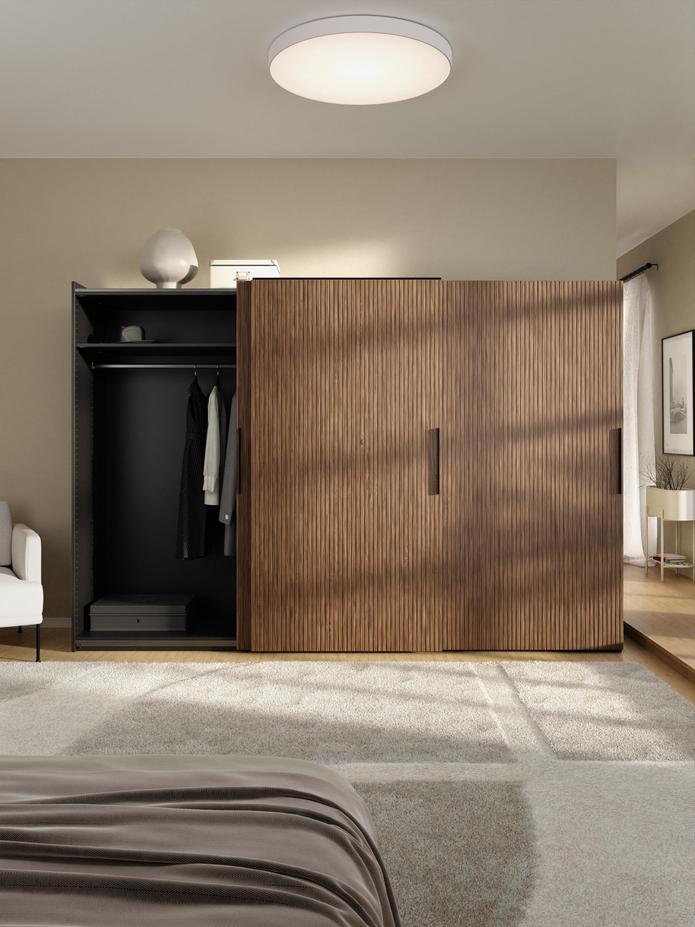
- Sliding wardrobes are ideal when floor space in front of the wardrobe is limited, as the doors glide sideways rather than opening into the room.
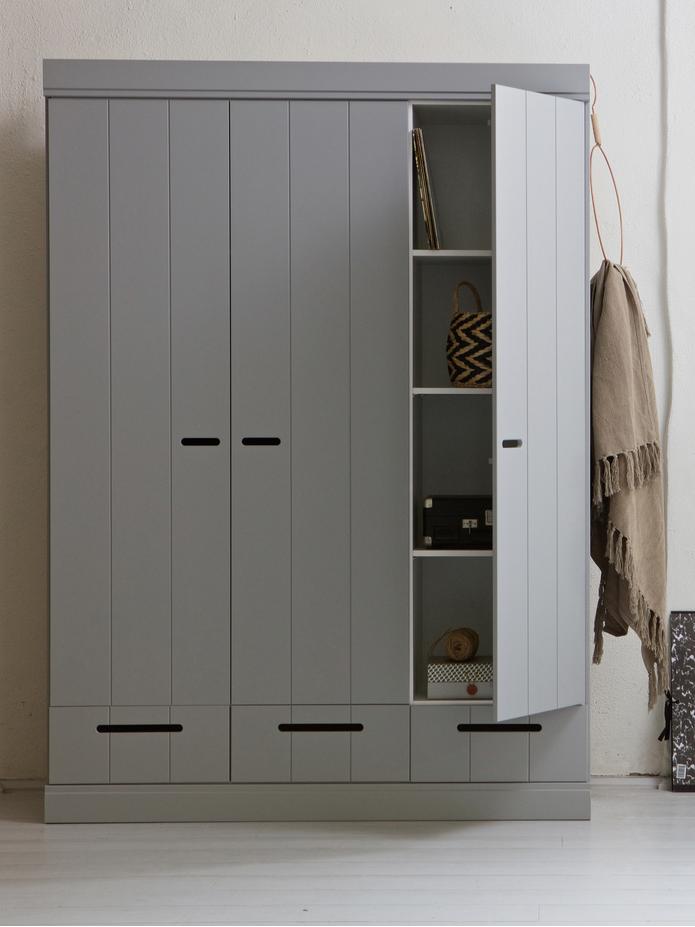
- Hinged-door wardrobes offer classic access and make it easy for more than one door to be opened at the same time.
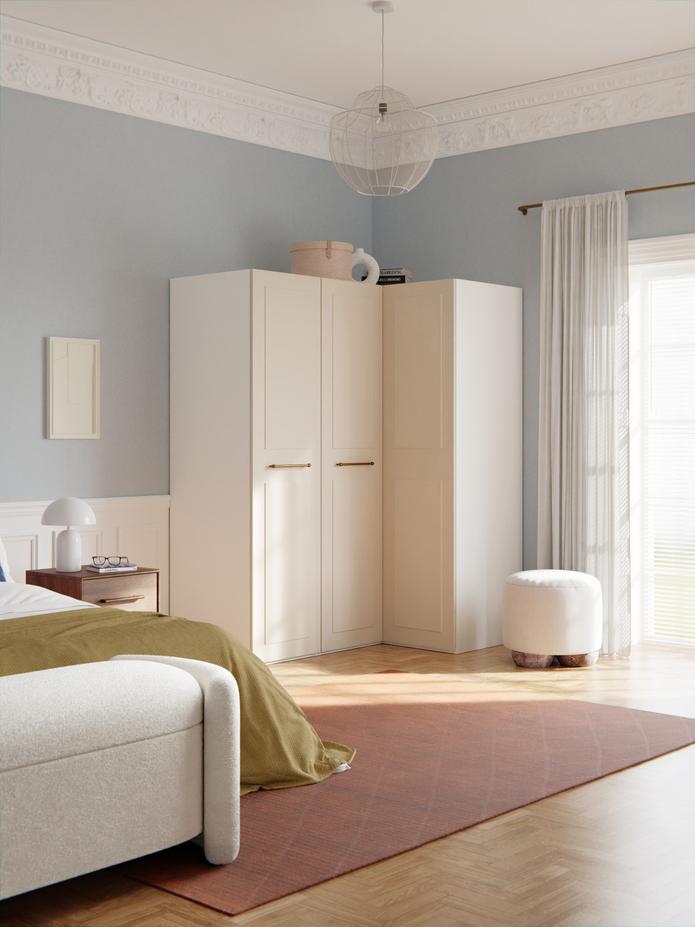
- Corner wardrobes make use of room corners and can add valuable storage where a straight wardrobe would not fit as efficiently.
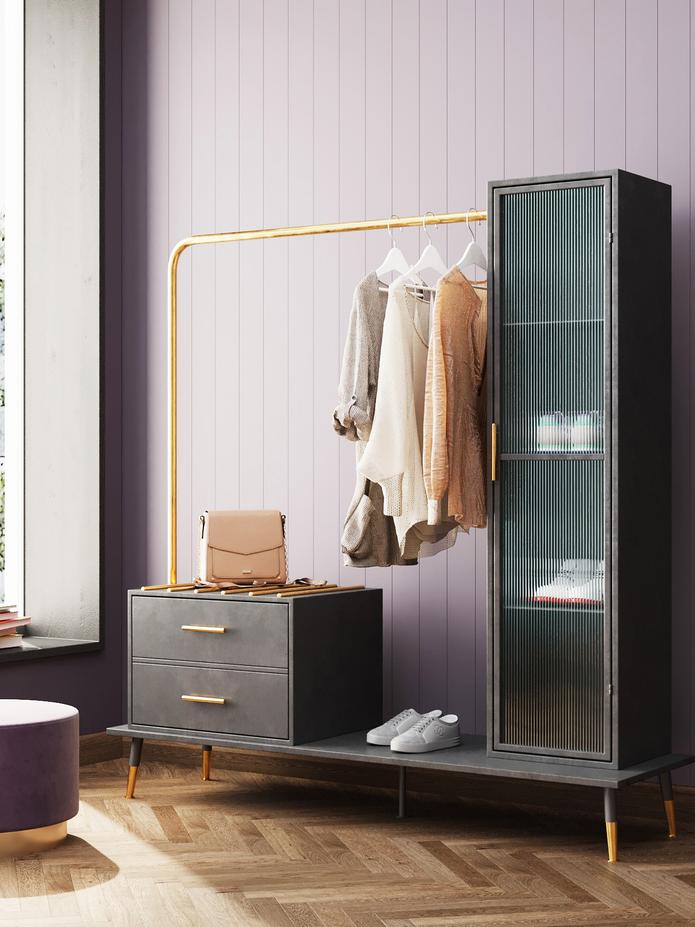
- Open wardrobes create a relaxed, boutique-inspired look and keep favourite pieces visible and easy to reach.
Colours, materials, frame and doors
Because a wardrobe usually occupies a large surface area, its colour has a strong influence on the room. Smaller bedrooms often benefit from light shades such as white, cream, beige or soft grey, as these finishes make the wardrobe feel calmer and less visually heavy. Mirrored doors or high-gloss surfaces can also reflect light and make the room appear more open. In a larger bedroom, a wardrobe in timeless black, deep grey or dark brown can create a sophisticated focal point without feeling overpowering.
Wood and wood finishes remain especially popular for wardrobes because they add warmth, texture and visual depth. A wooden wardrobe can enrich the bedroom with subtle grain patterns and warm tones. Light oak or beech-effect wardrobes suit Scandinavian-inspired, modern and minimal interiors, while darker wood finishes can work beautifully in elegant, industrial or country-inspired bedrooms. Clean wardrobe solutions in white, vanilla and beige create a calm, pared-back impression, particularly when handles and design details are discreet. If you prefer a more expressive look, consider a wardrobe with a material mix, for example wood with metal details or woven-look panels.
The frame and doors should be chosen according to the available space and the way you use the wardrobe. Wardrobes with sliding doors are particularly practical where there is limited clearance in front of the furniture. High-gloss or mirrored doors help visually expand the room by reflecting light. Classic hinged-door wardrobes have a more traditional feel and are practical when several people use the same wardrobe, as multiple doors can be opened at once. If the bedroom is compact, a smaller wardrobe can leave space for other furniture while still offering useful storage. For rooms with sloped ceilings, a lower wardrobe may be the better option. A corner wardrobe can make excellent use of an otherwise underused area, while an open wardrobe turns clothing and accessories into part of the room’s styling.
| Wardrobe type | Best suited to | Design effect | Practical note | |
|---|---|---|---|---|
| Sliding doors | Narrow bedrooms, rooms with limited clearance | Clean, streamlined, modern | No swing space needed in front of the wardrobe | |
| Hinged doors | Classic bedrooms, shared wardrobes | Traditional, balanced, versatile | Several doors can be opened at the same time | |
| Mirrored doors | Compact or darker room | Light-reflecting, visually spacious | Useful for dressing and checking outfits | |
| Open wardrobe | Dressing areas, curated clothing displays | Light, boutique-inspired, informal | Works best when clothes and accessories are kept neatly arranged | |
| Corner wardrobe | Bedrooms with unused corners | Efficient, structured, space-conscious | Helps make use of awkward layouts |
Placing your wardrobe in the room
The most classic position for a wardrobe is along a wall, where it takes up the least visual and physical space. In many bedrooms, the wardrobe is placed across an entire wall, creating a calm storage zone with a more built-in effect. Another considered option is to use the wardrobe as a room divider, especially in larger spaces. Positioned thoughtfully, it can separate a sleeping area from a dressing zone or create more privacy around the bed.
If the wardrobe stands one to one and a half metres away from the wall, with one narrow side against the wall, it can create the feeling of a small walk-in dressing area. In this layout, the back of the wardrobe faces the bed or room, while the doors open towards the wall. This can work beautifully in larger bedrooms, provided the rear panel is finished neatly and the overall colour feels harmonious with the room.
Interior fittings for better organisation
A wardrobe is not only about the exterior. The internal layout determines how easy it is to organise clothes, shoes and accessories every day. Consider how much hanging space you need, whether folded clothing should sit on shelves, and whether drawers would make smaller items easier to manage. Hanging rails are ideal for dresses, shirts, coats and jackets, while shelves work well for knitwear, denim, bags and storage boxes. Drawers or drawer inserts are useful for underwear, socks, scarves and smaller accessories. Pull-out trouser rails can help keep trousers visible, organised and easier to access.
| Wardrobe element | Description |
|---|---|
| Hanging rails |
|
| Shelves |
|
| Drawers |
|
| Shoe shelves |
|
| Trouser rails |
|
| Tie and belt holder |
|
| Mirrors |
|
| Lighting |
|
| Hooks |
|
Quality, materials and long-term use
A wardrobe is one of the largest and most frequently used pieces of furniture in the bedroom, so quality should be visible in both its structure and its details. Look for stable construction, smooth-running doors, reliable fittings and interior elements that feel practical for daily use. Surfaces should suit the rhythm of the room, whether you choose light finishes for a calm impression, dark tones for depth or mirrored fronts for brightness. A well-planned wardrobe does more than store clothing. It supports the room’s order, creates a composed backdrop and helps the bedroom feel quietly refined.
Care tips for wardrobe surfaces
Regular care helps keep the wardrobe looking polished over time. Wipe dust from surfaces with a soft cloth and avoid excessive moisture, particularly around wood finishes or joints. Mirrored and high-gloss fronts can be cleaned with suitable glass or surface cleaners and a soft cloth to reduce streaks and fingerprints. For metal details, avoid abrasive cleaners and dry the surface after wiping. Drawer runners, sliding door tracks and hinges should be kept free from dust so the wardrobe continues to open smoothly.